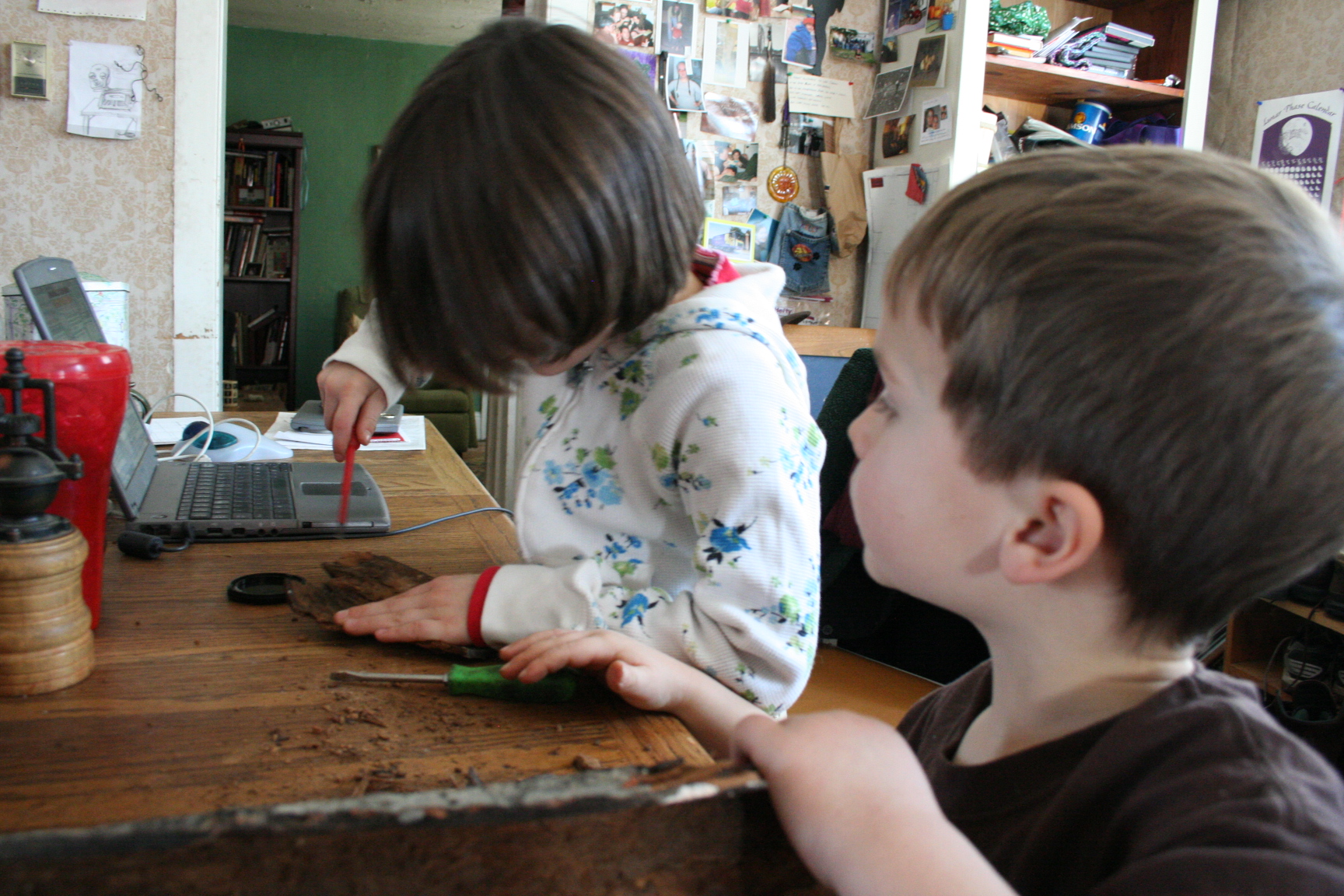
Canadian families spend an average of several hours per day managing their children's relationship with screens — televisions, tablets, smartphones, and gaming consoles. Reducing that time is a common goal, but the challenge is finding alternatives that actually hold a child's attention and feel worthwhile to both parent and child. The activities below are grouped by the type of skill they develop.
Why screen-free time matters for development
The Canadian 24-Hour Movement Guidelines, developed by the Public Health Agency of Canada and the Canadian Society for Exercise Physiology, recommend that children ages 5–17 limit recreational screen time to no more than two hours per day. For children under five, the guidelines are more restrictive still.
The reasoning is not simply about what screens do, but about what they displace. Hours spent passively consuming content are hours not spent in physical movement, imaginative play, face-to-face conversation, or hands-on problem solving — all of which are documented contributors to healthy cognitive and social development.
Key developmental areas supported by screen-free activities
- Executive function (planning, focus, task-switching)
- Fine and gross motor coordination
- Language acquisition and verbal reasoning
- Spatial and mathematical thinking
- Emotional regulation and social reading
Nature-based activities
Nature journaling
A nature journal is a notebook where children record observations about the natural world — drawings of leaves, sketches of insects, notes on weather patterns, pressed flowers. It combines observation, writing, and drawing into a single activity that can be adapted for ages 5 through 14.
The format is flexible. Younger children might glue in a leaf and draw what they think lives under it. Older children might track the migratory arrival of a specific bird species using data from Birds Canada, a national nonprofit that runs citizen science programs with schools and families.
Backyard and neighbourhood walks with a purpose
A walk with a specific observational goal is different from a routine outing. Examples that work for different ages:
- Count every different type of tree on your block and look them up later using a field guide
- Photograph five things that are the same colour and discuss why that colour appears where it does
- Find evidence of animals (tracks, nests, chewed bark) and sketch what you find
- Collect five natural objects and later describe each using only touch, without looking

Building and making
Open-ended construction materials
Block sets, magnetic tiles, cardboard tubes, and wooden offcuts give children material to build whatever they can imagine. What distinguishes these from toys with a fixed outcome is that the child must decide what to make. That decision-making process — planning, testing, revising — is itself the developmental work.
Many Canadian public libraries now stock "library of things" collections that include construction sets available for borrowing. The Toronto Public Library, for example, maintains a wide catalogue of games and building kits for loan.
Simple woodworking
With basic safety precautions, children as young as 7 or 8 can learn to use a hammer and nails, a hand drill, or a simple saw under adult supervision. Starting with birdhouse kits or simple shelf projects gives children a concrete goal and introduces them to measuring, marking, and following sequential steps.
Language and literacy activities
Reading aloud and storytelling
Reading aloud to children past the age at which they can read independently has a documented positive effect on vocabulary and reading comprehension. Studies referenced by the Literacy Council of Canada suggest that children whose parents continue reading aloud through the early school years show stronger reading outcomes than peers who transitioned to independent reading only.
Storytelling without a book — improvised oral stories, or stories built collaboratively where parent and child take turns adding sentences — develops narrative thinking, vocabulary, and listening skills simultaneously.
Word and language games
Games like Twenty Questions, I Spy variations with clues, and category naming games (name five things in a kitchen that are red, within 30 seconds) develop vocabulary and categorical thinking without materials.
Kitchen and household science
The kitchen is one of the most useful educational spaces in a home. Activities range from highly structured (following a recipe) to open-ended (what happens if we add baking soda to different liquids?).
- Baking: Involves measurement, fractions, sequential instructions, and chemistry
- Dissolving experiments: What dissolves in cold water vs. hot? In oil vs. water?
- Growing food: Regrowing green onion roots, sprouting lentils, or starting seedlings
- Simple cooking with supervision: Even peeling and chopping builds fine motor control and patience
"The ability to follow a multi-step process without losing track of where you are is one of the most useful cognitive skills a child can develop — and kitchen tasks are among the most natural ways to practise it."
Creative and artistic activities
Drawing from observation
Drawing what you see in front of you — a piece of fruit, a household object, a window view — develops attention, spatial reasoning, and hand-eye coordination. It is different from drawing from imagination, which develops different skills. Both are valuable.
Craft activities with simple materials
Paper folding, collage, sewing basic shapes, weaving with a cardboard loom, and finger knitting are all accessible to children in the 6–12 age range and require low investment in materials. Many Canadian families use Mountain Equipment Company (MEC) summer program guides or community centre craft kits as starting points.
Board games and card games
Turn-based games develop skills that digital games rarely do: patience, reading social cues, handling winning and losing with composure, and following rules that are enforced by other people rather than by software. Age-appropriate board games also tend to involve reading, counting, probability, and strategy.
Public libraries in most Canadian cities maintain collections of board games available for loan. Titles designed for mixed-age groups — where younger and older children can play together meaningfully — are especially practical for families with siblings of different ages.
Practical starting point for parents
One reliable approach: introduce one new screen-free activity per week and observe which ones the child returns to without prompting. The activities a child chooses independently are usually the ones that are developmentally well-matched to their current stage.
The goal is not to fill every hour with structured activity, but to make sure that screen-free time is genuinely available and that children have materials and options within reach when they choose to use them.